
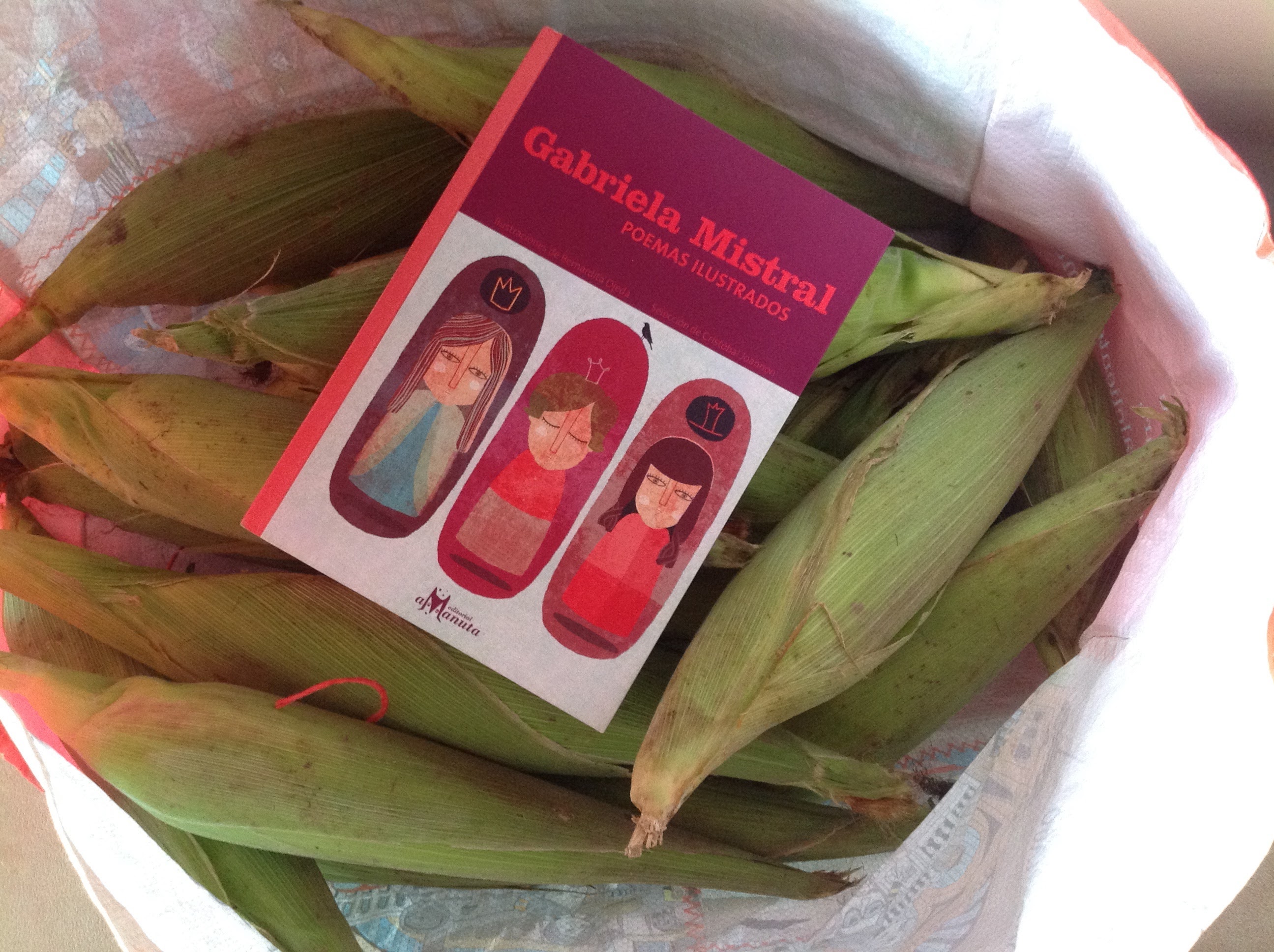
Casa Búho explores poetry for the first time with Gabriela Mistral's 'Canción del maizal', combining reading, writing exercises, and corn cob crafts.
At Casa Búho, this was the first time we ventured into a poem. Eugenia and Gotzon, our volunteers from the Basque Country, brought from Chile the book: Gabriela Mistral. Poemas Ilustrados. It is part of a beautiful collection of poetry books created by the publishing house Amanuta, which specializes in children’s literature.
The Chilean author and winner of the Nobel Prize in Literature in 1945, Gabriela Mistral, is an icon in her culture, in Latin America, and throughout the world.
That sensitivity and, at the same time, that power in her words inevitably guide both adults and children along the path of poetry, which truly cannot be resisted.
We chose the poem ‘Canción del maizal’. This was because the five weeks of work with Eugenia and Gotzon were planned around the theme of nutrition.
This poem is about corn, an essential food in our cuisine across the entire South American continent. The way Mistral describes the process a corn plant goes through from birth to harvest is wonderful.
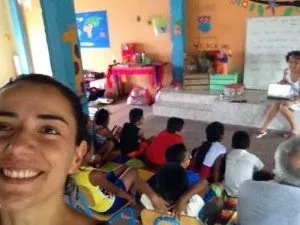
The children of Casa Búho felt a connection and thoroughly enjoyed reading the poem — not just once, but many times throughout the entire session. It truly must be said: the effect of Mistral’s poetic words captured the attention of our little owl readers, proving that poetry must absolutely be part of our sessions.
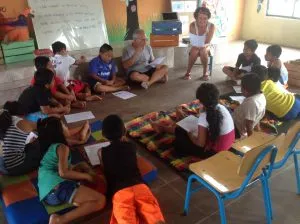
But the adventure of our reading session didn’t stop there. We also dared, for the first time, to do a reading-writing exercise that involved filling in the blanks of the poem. It was super fun because we went along rhyming the words and the children worked hard to find them thanks to the musicality of this poem. We discussed words that were not understood, thus reinforcing their vocabulary and enriching their baggage (the body of knowledge a person has).
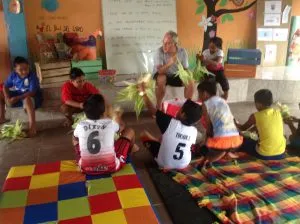
And it still doesn’t end there: we decorated our own corn cobs! It was phenomenal. We peeled back the corn husks, discovering their burnt silks, as the poem says :), and then we added little eyes and a mouth.
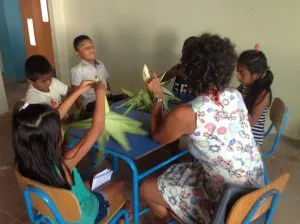
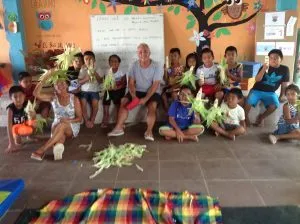
Here below is the poem we worked with:
I El maizal canta en el viento, verde, verde de esperanza. Ha crecido en treinta días, su rumor es alabanza.
Llega, llega al horizonte, sobre la meseta afable, y en el viento ríe entero con su risa innumerable.
II El maizal gime en el viento, Para trojes ya maduro; Se quemaron sus cabellos Y se abrió su estuche duro.
Y su pobre manto seco se le llena de gemidos: el maizal gime en el viento con su manto desceñido.
III Las mazorcas del maíz a niñitas se parecen: diez semanas en los tallos bien prendidas que se mecen.
Tienen un vellito de oro como de recién nacido y unas hojas maternales que les celan el rocío.
Y debajo de la vaina, como niños escondidos, con sus dos mil dientes de oro, ríen, ríen sin sentido…..
Las mazorcas del maíz a niñitas se parecen: en las cañas maternales bien prendidas que se mecen.
Él descansa en cada troje con silencio de dormido; va sonando, va soñando un maizal recién nacido.